
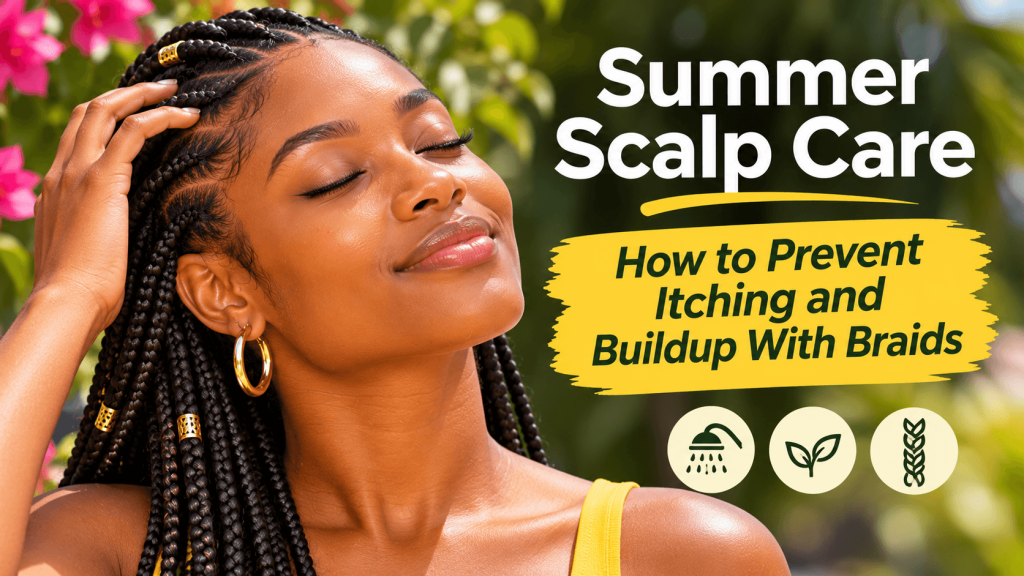
Braids can make everyday styling more manageable, but they do not remove the need to care for your scalp. During summer, perspiration, swimming and repeated use of styling products can leave the roots feeling less fresh, even when the braids still look neat.
If your scalp starts itching, it can be tempting to add oil or reach for another braid spray. However, itching is not always a sign of dryness. Product residue, tight installation, irritation and underlying scalp conditions can all contribute, and each needs a different response.
Good scalp care with braids starts with comfortable installation, regular cleansing and products that suit your skin. These habits can help reduce avoidable discomfort without turning braid maintenance into a complicated routine.
Why Can Braids Become Itchy in Summer?
Braids leave the scalp exposed between sections, but access alone does not keep it clean. Sweat, natural oils, dead skin and styling products can accumulate when cleansing is delayed. Adding more gel or spray to refresh the appearance can leave another layer behind.
The Centers for Disease Control and Prevention’s scalp hygiene guidance explains that oil, skin cells, dirt, product residue and sweat can build up on the scalp. Regular washing helps remove this accumulation.
However, not every itchy scalp is caused by build-up. If discomfort begins immediately after installation, or follows a new product, consider whether tension or irritation may be involved rather than simply applying more moisture.
Itching Is Not Always a Dry-Scalp Problem
Dryness can cause discomfort, but flakes and itching can also occur with dandruff, seborrhoeic dermatitis or a reaction to products or extension materials. The appearance of flakes alone cannot confirm the cause.
In Baylor College of Medicine’s dermatologist-led advice on braids, itching is discussed in relation to both seborrhoeic dermatitis and contact dermatitis. This is why repeatedly oiling an itchy scalp may not address the problem.
Notice when symptoms started and what changed. Was a different gel used? Are certain braids pulling? Does the itching persist after washing? These details can help a healthcare professional assess ongoing symptoms and help your stylist avoid repeating an unsuitable installation or product choice.
Start with a Comfortable Installation
An installation that pulls at the scalp can become uncomfortable before any residue has had time to accumulate. Pain, stinging, bumps or a persistent pulling sensation should be addressed during the appointment.
Tell your stylist about previous reactions, fragile edges and any scalp condition you already manage. Discuss the amount of extension hair, braid length and how delicate areas will be handled. A neat finish should not depend on tightly capturing every short hair around the hairline.
The British Association of Dermatologists’ guidance on Afro-textured hair advises against painful, overly tight braiding and highlights the extra tension created by heavy extensions and tight updos. Our guide to protective hairstyles that actually protect your hair explains why installation is part of ongoing hair care.
How to Wash Your Scalp While Wearing Braids
Washing may soften the appearance of the style, but preserving perfectly fresh partings should not take priority over a clean, comfortable scalp. Ask your stylist how to wash and dry your chosen braids before leaving the salon.
Apply Cleanser Where It Is Needed
Wet the scalp and apply a suitable shampoo between the braid sections, following the product instructions. A nozzle applicator can make placement easier, but there is no need to scratch along each parting or use a tool to lift residue.
Massage gently with the pads of your fingers. Avoid vigorous rubbing at the braid bases, which can disturb the installation and pull at your natural hair. Do not automatically dilute or leave shampoo on longer unless the instructions support that use.
Rinse Thoroughly
Work through the sections so cleanser and loosened residue are rinsed away. Shampoo left behind can contribute to an uncomfortable or coated feeling, so allow enough time for rinsing rather than concentrating only on the visible hairline.
Condition the hair appropriately and rinse products intended to be washed out. A cleansing mist or a quick wipe may offer a temporary refresh, but neither should be assumed to replace washing when substantial residue remains.
Dry the Roots and Braids Properly
Gently squeeze out excess water and blot with a towel rather than pulling or twisting the braids. Allow enough drying time for the roots and denser sections, not just the outer surface.
If you use a dryer, choose an appropriate low setting and avoid excessive heat against the scalp. Do not tie damp braids into a tight bun or cover wet roots for bed. Ask for professional help if the length or density makes thorough washing and drying difficult at home.
How Often Should You Wash Braids in Summer?
There is no single schedule for every scalp. Activity, perspiration, swimming, product use and an existing scalp condition can change how often cleansing is needed.
Baylor’s dermatologist guidance recommends washing every two weeks while wearing braids, but that should not become a reason to delay cleansing when your scalp needs attention sooner. A personalised plan is more useful than waiting for the style to look untidy.
If you already use a prescribed scalp treatment, discuss how the braid pattern will allow you to continue it. Do not stop treatment simply to preserve the hairstyle. Repeated itching despite appropriate washing needs assessment rather than a longer gap between washes.
Reduce Product Build-Up Between Washes
More products do not necessarily mean better scalp care. Heavy pomades, repeated edge-control application and layers of oil or spray can make it harder to keep the roots clean.
Use the smallest amount that meets your needs and follow the directions. If a product causes burning, increased itching or a rash, stop using it and follow its removal instructions. Avoid adding another scented product to cover the reaction.
Do not apply undiluted essential oils, household cleaners or improvised acidic rinses to an irritated scalp. A cooling or tingling sensation is not proof that a product is suitable. Keeping the routine simple also makes it easier to identify something your skin does not tolerate.
Adjust Your Routine After Exercise and Swimming
After exercise, let your scalp and roots dry before covering them. Blot gently if needed and cleanse according to your scalp’s condition rather than repeatedly spraying fragrance over perspiration.
After swimming, rinse your hair and follow an appropriate cleansing and conditioning routine. Braids do not prevent contact with pool chemicals. The American Academy of Dermatology’s summer hair care advice recommends rinsing and washing after swimming, followed by conditioning.
Choose a style you can maintain around your summer plans. A very long or dense installation may require more effort to rinse and dry, even if daily styling is minimal.
What if the Flakes Are Dandruff?
If dandruff is suspected, a suitable anti-dandruff shampoo may be more useful than another moisturising spray. The American Academy of Dermatology’s dandruff guidance recommends following the selected shampoo’s instructions, including any required contact time.
For curly or coily hair, treatment should focus on the scalp while the lengths receive appropriate care. Ask a pharmacist or healthcare professional for help choosing a product, especially if you are unsure what is causing the flakes. Persistent or severe symptoms need medical assessment.
When to Remove the Braids or Seek Help
A painful installation should be loosened or removed rather than covered with soothing products. Avoid scratching with fingernails, comb ends or other objects, as this can injure the skin.
Seek medical advice for persistent itching, a spreading rash, sores, discharge, scalp swelling or thinning hair. Prompt care is particularly important if you develop severe pain or feel unwell. A stylist can adjust or remove a hairstyle, but cannot diagnose an infection or inflammatory scalp condition.
Do not keep braids in simply because the extensions still look neat. Our article on when to refresh protective hairstyles explains why the condition of your scalp and natural hair should guide maintenance.
Frequently Asked Questions
Does an Itchy Scalp Mean My Hair Is Growing?
No. Itching is not a reliable sign of hair growth. Consider cleansing needs, tension, irritation and scalp conditions instead.
Should I Oil My Scalp Every Day with Braids?
Not automatically. Daily oiling can add residue and may not address the cause of itching. Use products according to your scalp’s needs rather than a fixed daily rule.
Can I Wash Knotless Braids Without Removing Them?
Yes, provided the installation allows effective cleansing, rinsing and drying. Ask your stylist how to maintain your particular style and when removal is needed.
Should I Keep Scratching Until the Flakes Come Off?
No. Scratching or scraping can damage the skin. Cleanse gently and seek advice if flakes or itching continue.
Keep Your Braids Comfortable Throughout Summer
Consistent scalp care with braids means keeping the roots clean, limiting unnecessary product layers and responding to discomfort early. Your maintenance routine should support your scalp as well as the appearance of the style.
For braiding in Hartbeespoort, view Bangs & Butch’s braids and twist services or request an appointment. Tell our team about your summer routine and any previous installation concerns so we can discuss a comfortable style and practical aftercare.