
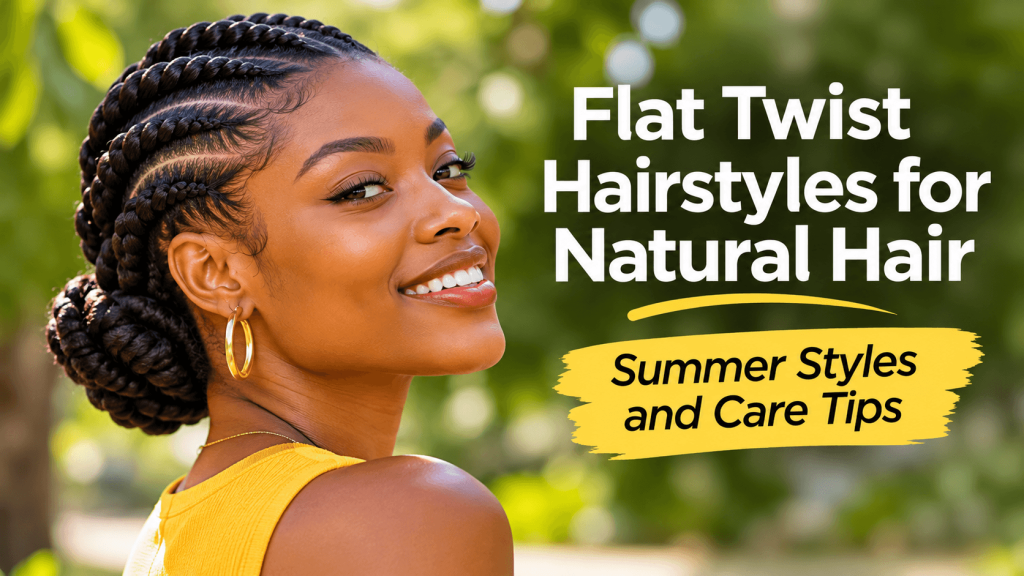
Natural hair needs a balance of gentle styling, consistent moisture and a routine that works for everyday life. During summer, swimming, perspiration and more time outdoors can make that balance harder to maintain. Choosing a style that reduces daily handling can help, provided your hair and scalp continue to receive the care they need.
Flat twist hairstyles offer a versatile way to wear natural hair, from simple straight-back rows to softly shaped updos. They can keep your hair neatly arranged without hiding its texture, while giving you different options for work, weekends and special occasions.
However, the benefits depend on more than the finished appearance. Preparation, comfortable tension and suitable aftercare all matter. Understanding these details will help you choose a style that looks good and remains manageable throughout summer.
What Are Flat Twists?
Flat twists are created by dividing a section of hair into two strands and twisting them together while gradually incorporating more hair along the scalp. This creates a connected, rope-like pattern that follows the shape of the head.
Although they can look similar to cornrows, the techniques are different. Cornrows use three strands in a braiding pattern, while flat twists use two. Individual two-strand twists, meanwhile, hang freely rather than remaining attached along the scalp.
Flat twists on natural hair can be worn as a finished hairstyle or unravelled to create a twist-out. The same technique can therefore produce a neat, contained look or a fuller style with loose definition.
Why Choose Flat Twist Hairstyles for Summer?
One of the main advantages of flat twists is that they reduce the need to comb, brush and restyle your hair every morning. This can make your routine simpler while limiting repeated handling of delicate strands.
Styles with tucked ends can also reduce friction against clothing and keep the oldest parts of the hair contained. Updos offer the practical benefit of keeping longer hair away from the neck on warmer days.
These benefits do not make flat twists maintenance-free. A style that pulls at the hairline, prevents effective cleansing or leaves your hair feeling dry needs attention. Our guide to protective hairstyles that actually protect your hair explains why installation and maintenance are essential to protective styling.
Flat Twist Styles to Consider
Straight-Back Flat Twists
Straight-back twists are a practical choice for a neat, understated finish. The rows follow the scalp towards the back, with the ends left in individual twists or gently tucked away, depending on your length.
For anyone considering easy flat twist hairstyles, this is a useful starting point. A simple pattern makes it easier to see the sections and understand the technique, while still allowing variation in the size and placement of the twists.
Side-Parted Flat Twists
A side part creates a softer change in direction and can add shape around the face. The twists may sweep towards one side or lead into a tucked finish at the back.
This style can be adapted to different lengths, but the front sections should never be pulled tightly to achieve a particular shape. The pattern should work with your hairline and the amount of hair available.
Flat Twists into a Low Bun
A low bun combines a defined scalp pattern with a contained finish. It is a versatile option for office wear and occasions, particularly when your hair has enough length to secure the ends comfortably.
The bun should feel supported without tight elastics or pins pressing into the scalp. If your hair cannot comfortably reach the intended position, a smaller tucked finish may be a better choice.
Crown and Pinned Updos
Flat twist updo hairstyles can follow a crown pattern or bring several sections together in a softly pinned arrangement. These styles offer a more detailed finish while keeping the ends contained.
A successful updo depends on thoughtful sectioning rather than tight pulling. Shorter areas around the temples and nape may need a different approach from the longer sections, especially if the hairline is fragile.
Flat Twist Hairstyles for Short Hair
Flat twist hairstyles for short hair should be designed around the length you have. Short rows, side-swept sections and small tucked finishes can create an attractive shape without requiring a large bun or added length.
There is no universal minimum length for every flat-twist style. Shrinkage, density and the position of shorter sections affect what can be achieved. A reference photograph can help communicate your preference, but the final pattern may need adapting.
Avoid forcing short ends into place with repeated pulling or excessive product. A well-chosen style should remain comfortable and practical between appointments.
Flat Twist Hairstyles for 4C Hair
Flat twist hairstyles for 4C hair can highlight the fullness and definition of tightly coiled texture. Careful preparation makes the styling process easier and helps reduce unnecessary pulling.
Start with clean, conditioned hair and detangle gently in sections, working from the ends towards the roots. A suitable leave-in conditioner or styling product can help with manageability, but applying more product does not automatically improve the result.
Some people prefer lightly stretched hair for easier sectioning, while others prefer working with their natural shrinkage. Heat is not essential. The best approach depends on your hair’s condition, the desired finish and how you normally manage your texture.
How to Care for Flat Twists in Summer
Keep Your Scalp Clean
Protective styling should not interrupt scalp care. Perspiration, styling products and swimming can all affect how soon your hair needs washing. Adjust your cleansing routine to your scalp and activity rather than trying to preserve the style at any cost.
Cleanse gently, rinse thoroughly and allow the roots and lengths to dry properly. If washing loosens some sections, discuss a gentle refresh instead of repeatedly tightening the same areas.
Maintain Moisture Without Product Build-Up
Your hair still needs conditioning while it is twisted. Apply a suitable moisturising product as needed, paying attention to the lengths and ends rather than repeatedly coating the scalp.
St George’s University Hospitals guidance on natural twists highlights the importance of moisturisation and thorough detangling. Heavy layers of oil, cream and gel can create residue, so keep your routine appropriate to your hair rather than adding products whenever the style looks less fresh.
Take Extra Care After Swimming
Flat twists do not prevent exposure to pool chemicals. Consider a comfortable swim cap, rinse your hair after swimming and follow with suitable cleansing and conditioning.
The American Academy of Dermatology’s summer hair care guidance recommends protecting hair during swimming and rinsing and washing afterwards. A comfortable hat and time in the shade also help reduce sun exposure when you are outdoors.
Protect Your Hair While Sleeping
A satin bonnet, scarf or pillowcase can help reduce friction overnight. Choose a comfortable fit that does not pull across your edges, and avoid covering hair while the roots are still damp.
Some frizz is normal. Repeatedly brushing the hairline or applying strong-hold products to maintain a perfectly sleek finish can create more handling than your hair needs.
When Should You Refresh Your Flat Twists?
The right refresh schedule depends on your hair, scalp, style and routine. Swimming frequently, washing more often or wearing a detailed pattern may mean your twists need attention sooner.
Discomfort should never be ignored. The American Academy of Dermatology warns that hairstyles which pull can cause hair loss. Loosen or remove a painful style, and seek medical advice for persistent scalp symptoms or thinning.
When removing the twists, work slowly and detangle each section gently before restyling. For more guidance, read our article on when to refresh your protective hairstyle.
Frequently Asked Questions
Do Flat Twists Help Hair Grow?
Flat twists do not increase the rate of hair growth. They may help retain length by reducing repeated handling and breakage when installed and maintained gently. Our article on twists and hair growth explains the distinction.
Can You Wash Your Hair with Flat Twists?
Yes, although washing may loosen the pattern. Keep your scalp clean, rinse thoroughly and dry your hair properly. Ask your stylist how to maintain your particular style after washing.
Are Flat Twists Better Than Cornrows?
Neither style is automatically better for your hair. Both require suitable sectioning, comfortable tension and consistent care. Your hair’s condition and the way the style is installed matter more than the name of the technique.
Can Flat Twists Be Worn as a Twist-Out?
Yes. Allow the hair to dry completely before gently unravelling the twists. Separate the sections carefully to create the desired shape, keeping in mind that humidity and swimming can change the definition.
Choose a Summer Style That Works for Your Hair
The right flat-twist style should suit your texture, feel comfortable and fit the amount of care you can maintain at home. Whether you prefer simple rows or a softly shaped updo, gentle installation and consistent aftercare will help you get more from your style.
For flat twists and natural hair care in Hartbeespoort, view Bangs & Butch’s hair services or request your next appointment. Our team can help you choose a look that suits your hair, your scalp and your summer routine.