
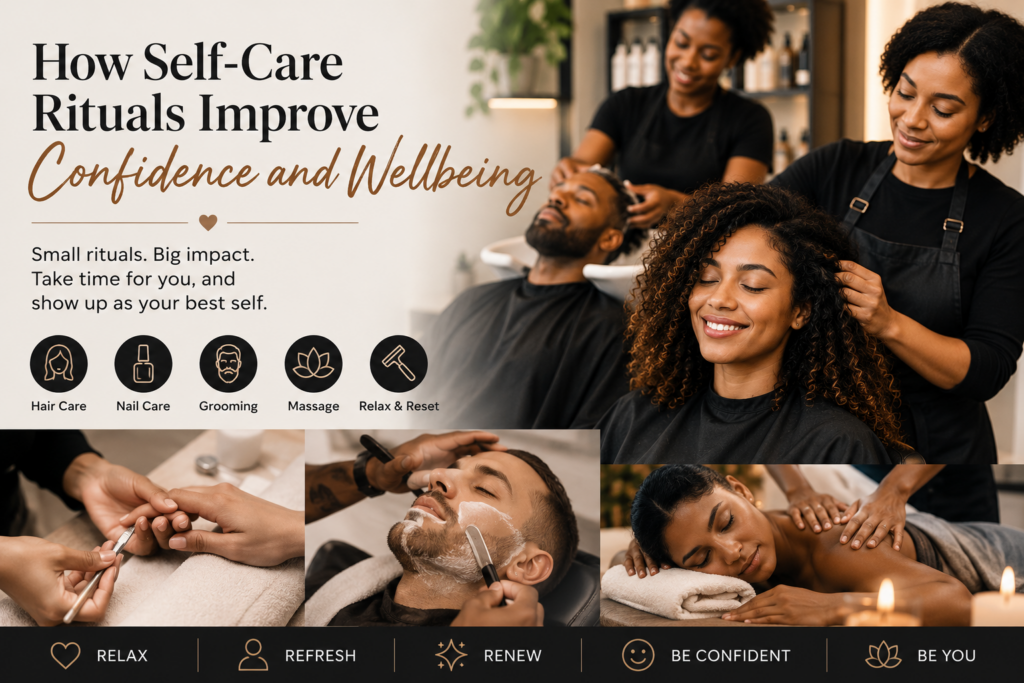
There was a time when self-care felt like a reward. Something you did after a long week, a stressful season, or when everything else was finally done.
That time is over.
Today, self-care isn’t a luxury. It’s maintenance — just like servicing your car, managing your health, or maintaining your home. And when it comes to your hair, skin and overall wellbeing, consistency is what keeps everything functioning at its best.
In this article, you’ll read about what self-care really means today, why it’s essential (not optional), and how to build a self-care routine that supports your confidence, appearance and everyday performance.
What Self-Care Really Means Today
Self-care has evolved. It’s no longer just bubble baths and spa days — it’s about preventative care.
Think about it this way:
- You don’t wait for your car to break down before servicing it
- You don’t wait until you’re exhausted before sleeping
- So why wait until your hair is damaged or your skin is stressed before taking care of it?
Modern self-care is about staying ahead of problems, not reacting to them.
According to McKinsey & Company, the global wellness market continues to grow rapidly, with consumers prioritising daily wellness habits, beauty routines and in-person services as part of their lifestyle — not as occasional indulgences.
That shift tells us one thing:
Self-care is now part of how people function, not just how they relax.
Why Beauty and Hair Care Count as Self-Care
There’s a misconception that hair appointments or beauty treatments are “extra”. In reality, they are part of a structured self-care routine.
Your hair, scalp and skin are directly linked to:
- Your confidence
- Your professional presence
- Your emotional wellbeing
When your hair feels neglected, dry or unmanageable, it affects more than just your appearance — it impacts how you show up in your day.
Regular treatments like:
- Deep conditioning
- Scalp care
- Protective styling
- Trims and maintenance
…are not cosmetic luxuries. They are essential upkeep.
This is especially important in South Africa, where environmental factors like sun exposure, dryness and pollution can accelerate damage if hair care is inconsistent.
The Link Between Routine, Confidence and Wellbeing
Consistency is what turns self-care into maintenance.
A once-off treatment might feel good, but it’s your routine that creates lasting results.
Research from the American Psychological Association continues to show that ongoing stress affects both physical and mental health. Chronic stress can lead to:
- Hair thinning or shedding
- Skin irritation
- Fatigue and burnout
A consistent self-care routine helps regulate that stress.
It creates:
- Structure in your week
- Moments of reset
- A sense of control
And that directly translates into confidence.
When you look put together, you feel more prepared — whether you’re stepping into a meeting, attending an event, or simply navigating your day.
Why Waiting for “Time” Doesn’t Work
One of the biggest reasons people neglect self-care is time.
“I’ll do it when things calm down.”
“I’ll book when I’m less busy.”
But here’s the reality: things rarely slow down.
When self-care is treated as optional, it’s the first thing to be pushed aside. That’s why it needs to be reframed as non-negotiable maintenance.
Just like:
- Monthly expenses
- Work commitments
- Family responsibilities
Your personal care should have a place in your schedule.
How Often Should You Maintain Your Self-Care Routine?
Consistency doesn’t mean excess — it means structure.
Here’s a practical rhythm:
Weekly
- Moisturising and basic hair care
- Scalp attention
- Skin care routines
Monthly
- Salon visits
- Hair treatments
- Trims or style refresh
Quarterly
- Deeper restorative treatments
- Style changes or protective styles
This kind of rhythm ensures you’re maintaining, not repairing.
Simple Self-Care Habits That Fit Real Life
You don’t need hours to maintain your routine. You need intention.
Start with small, consistent habits:
- Set a recurring reminder for your next hair appointment
- Keep your products visible and accessible
- Treat your salon visits as fixed appointments, not flexible ones
- Build your routine around your lifestyle, not against it
The goal is to make self-care repeatable, not overwhelming.
Why Salon Visits Shouldn’t Wait Until There’s a Problem
Most people only book when something goes wrong:
- Hair breakage
- Severe dryness
- Scalp irritation
- A style that’s grown out too far
By that point, you’re not maintaining — you’re repairing.
Regular salon visits allow professionals to:
- Identify early signs of damage
- Recommend the right treatments
- Keep your hair healthy and manageable
It’s the difference between proactive care and reactive fixes.
The Emotional Side of Self-Care
Self-care isn’t only physical — it’s psychological.
According to Mintel, modern beauty trends show a strong shift towards emotional wellbeing and comfort-driven routines. People are using beauty and hair care as a way to:
- Ground themselves
- Feel in control
- Create moments of calm
That’s why a simple salon visit can feel like more than just grooming — it’s a reset.
Self-Care Maintenance Checklist
If you’re not sure where to start, use this as your baseline:
- Do you have a consistent self-care routine?
- Are your hair appointments scheduled in advance?
- Are you maintaining your hair before damage starts?
- Do you prioritise how you feel, not just how you look?
If the answer is no to most of these, it’s time to shift your approach.
Make Self-Care Part of Your Routine — Not an Afterthought
Self-care is no longer about indulgence. It’s about staying ready.
When you maintain your hair, your appearance and your wellbeing:
- You reduce stress
- You prevent bigger problems
- You show up with confidence
And most importantly, you stop playing catch-up with yourself.
Take the First Step
If it’s been a while since your last appointment, don’t wait for damage to force the decision.
Book your next hair treatment appointment and start building a self-care routine that works for you.
Explore our salon services designed to keep your hair healthy, your style fresh, and your confidence consistent.
Because the truth is simple:
Self-care isn’t a luxury anymore — it’s maintenance.