
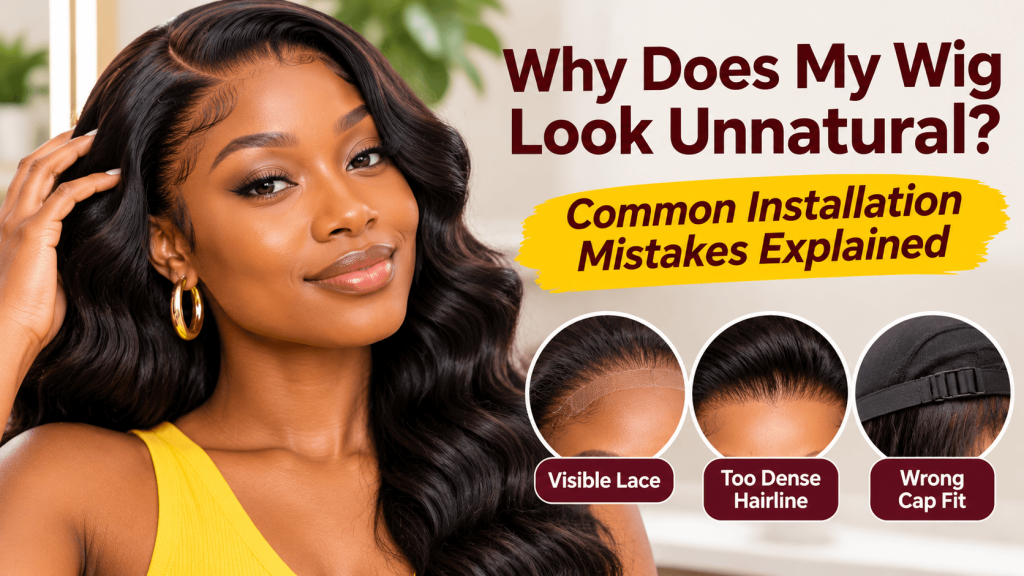
You choose a wig you love, put it on and realise the result looks different from what you expected. The hair may be beautiful, but the hairline seems too heavy, the lace is visible or the whole style sits higher than it should.
An unnatural finish does not always mean you bought the wrong wig. The way your natural hair is prepared, how the cap fits and where the hairline is positioned can all affect the result. Small installation details can make a noticeable difference before you consider replacing the unit.
A natural-looking wig installation brings together comfortable fit, suitable placement and styling that works with the wig’s construction. Understanding the common mistakes helps you identify what needs attention without adding unnecessary products or making permanent changes too soon.
Why Can a Good Wig Still Look Unnatural?
A wig may look unnatural because the base is bulky, the cap does not fit correctly, the lace contrasts with your skin or the hairline and parting look too uniform. Excess product, an unsuitable shape and poor placement can make these details more noticeable.
Start by looking at the overall shape before focusing on the lace. Check the front, sides and back in natural light. If the wig is sitting unevenly, adding tint or adhesive will not correct the underlying fit.
The aim is to understand the problem first. Some adjustments are straightforward, while cutting lace, thinning the hair or bleaching knots permanently changes the unit and deserves more care.
1. The Hair Underneath Creates a Bulky Base
Your natural hair forms the foundation of the installation. A large bun, uneven braids or layers of folded hair can push the wig upwards, creating a raised crown or an obvious bump at the back.
The solution is a flatter, more evenly distributed base suited to your length and density. Depending on your hair, that may involve cornrows, flat twists or another comfortable arrangement. It should not require painfully tight braiding.
Bangs & Butch’s wig lines and hair services include preparation designed to help a wig sit more comfortably. A flatter foundation should come from thoughtful sectioning rather than pulling harder on the scalp.
2. The Wig Cap Is the Wrong Size
A cap that is too large may shift or bunch, while one that is too small may pull at the temples or fail to sit comfortably around the ears. Both can affect the shape and make the installation harder to maintain.
Check the manufacturer’s sizing instructions and assess the fit before trimming lace or applying adhesive. Adjustable straps can help within the cap’s intended range, but overtightening them is not a reliable solution to an unsuitable size.
A secure wig should feel supported without pressure or discomfort. If the cap continues to wrinkle or pull after adjustment, ask a stylist whether the construction is suitable for you.
3. The Hairline Is Positioned Incorrectly
Placing a wig too far forward can change the proportions of your face, while placing it too far back may expose an unintended edge or create an awkward transition.
Use your natural hairline as a reference where appropriate, while also checking the ear tabs, temples and nape. If you have hair loss or no visible hairline, fitting should consider your facial proportions and the cap’s intended position rather than a fixed forehead measurement.
Look from the side as well as straight ahead before securing the wig. Placement should be assessed while adjustments are still easy to make.
4. The Lace or Wig Cap Does Not Blend
Visible lace can create a pale, grey or contrasting edge against the skin. Sometimes the problem is the lace shade; in other cases, a cap underneath shows through or old product has left a visible residue.
Assess the clean lace in daylight before adding makeup or tint. A small amount of a suitable product may help, but heavy layers can make the mesh look coated and the parting too bright.
Not every lace issue can be corrected with more product. The lace material, its condition and the cap beneath it all affect the finish. Avoid cutting away more lace until you understand why the edge is visible.
5. The Hairline Looks Too Dense or Too Perfect
A solid, uniform row of hair can make the front look heavier than intended. However, that does not mean every wig needs plucking or dramatic baby hairs.
Some units are already customised. Removing more hair can create gaps, weaken the front or expose the lace. Similarly, bleaching knots may be unsuitable for the fibre or construction and can damage hair when performed incorrectly.
Ask a stylist to assess whether customisation is necessary. A softer hairline should suit the style you want, rather than follow the same pattern for every face and every wig.
6. Too Much Adhesive or Styling Product Is Used
More adhesive does not automatically produce a cleaner or more secure finish. Excess product can leave residue, create visible ridges and make removal more difficult. Layering fresh product over old build-up can also make the hairline appear untidy.
Use only products intended for the chosen installation method and follow their application, skin-testing and removal instructions. Adhesives differ, so a setting time or technique seen in a video may not apply to the product you own.
A natural-looking wig installation does not always require glue. A properly fitted glueless unit may suit your needs, although bands, clips and combs must also feel comfortable. Stop using a product that causes irritation and seek medical advice for persistent symptoms.
7. The Parting and Overall Shape Need Attention
A very wide, pale parting can look artificial, while a dense, poorly defined part may fail to create the finish you expected. The available parting space also depends on whether the wig has a closure, frontal or another cap construction.
Work within that design rather than forcing the hair into a direction the cap cannot support. Adjusting the hair direction or using a small amount of suitable blending product may be enough.
The cut matters too. Excess fullness around the face or an unsuitable length can make the wig feel disconnected from your features. The American Cancer Society’s wig guidance notes that a stylist can trim or thin a wig where needed to improve its appearance. Such changes should be planned carefully because removed hair cannot grow back.
8. Shine and Product Build-Up Affect the Finish
An overly glossy or stiff appearance can make the hair look less natural. This may relate to the fibre, its surface finish or the products applied during styling.
Follow the care instructions for your particular wig instead of treating human hair and synthetic fibres identically. Suitable washing and restrained product use may help restore movement, but avoid improvised chemical treatments or heat unless the manufacturer confirms they are appropriate.
Heat resistance varies between units. Check the permitted tools and temperatures before using a dryer, straightener or hot comb. A styling shortcut can permanently damage an unsuitable fibre.
Protect Your Natural Hair and Scalp
A neat finish should never come at the expense of comfort. Tight braids underneath, pulling clips and forceful removal can place stress on your hairline even when the wig itself looks good.
The American Academy of Dermatology explains that repeated pulling can cause traction alopecia. If an installation hurts, it needs adjustment. Follow the adhesive manufacturer’s removal instructions and never pull bonded lace away by force.
Continue cleansing and caring for your natural hair between installations. Our guide to protective hairstyles that actually protect your hair explains why gentle installation and consistent maintenance matter.
Frequently Asked Questions
Why Does My Lace Front Wig Look Bulky?
Check the hair underneath, cap fit and placement first. If those are correct, the wig’s density or cut may need assessment. Adding adhesive will not remove bulk beneath the cap.
Do I Need to Pluck Every Wig?
No. Some wigs are already customised, and others do not need it. Unnecessary plucking can create sparse areas or damage the hairline.
Can a Glueless Wig Look Natural?
Yes. Fit, placement, lace blending and styling all contribute to the appearance. Glue is one securing method, rather than a requirement for every realistic finish.
Should I Replace a Wig That Looks Unnatural?
Not immediately. Preparation, fit or styling adjustments may improve it. A stylist can assess what is achievable, particularly if the cap is unsuitable or the lace is damaged.
Get a Finish That Suits You
The best starting point is a comfortable base and a wig that fits. Once those are right, careful placement and appropriate finishing can bring the look together without overworking the hairline.
For wig installation in Hartbeespoort, view Bangs & Butch’s wig fitting and styling services or request an appointment. Our team can assess your wig and discuss a finish that suits your features, your natural hair and your maintenance routine.