
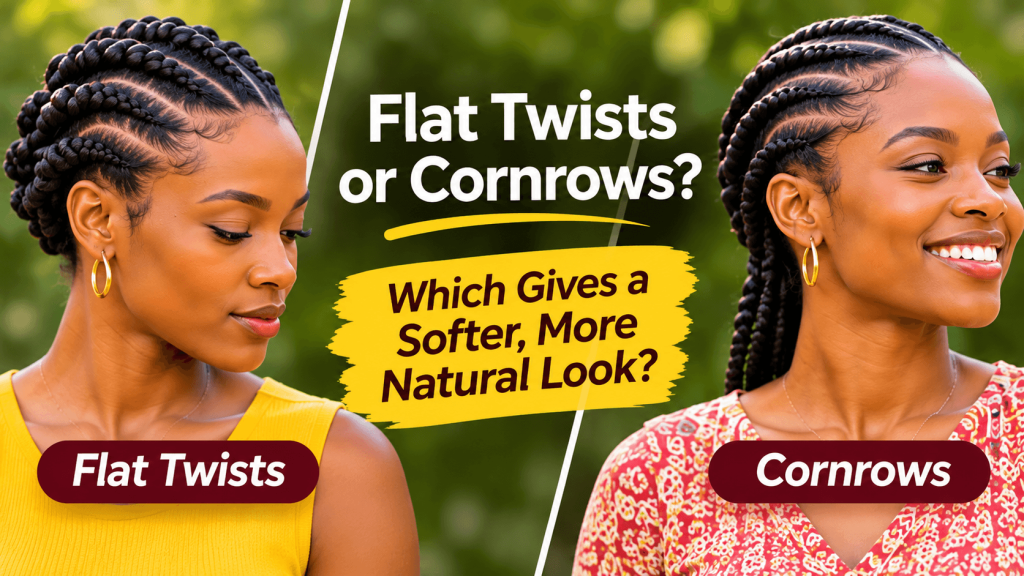
Choosing a protective hairstyle often starts with a photograph. You like the shape, the neat partings or the way the hair frames someone’s face, but you may not be sure which technique creates that finish.
Flat twists and cornrows can look similar because both follow a pattern along the scalp. Look more closely, though, and the difference becomes clearer. Flat twists usually create a rounded, rope-like texture, while cornrows have a more defined braided structure.
If you want a softer visual finish, flat twists are often worth considering. However, both styles can look natural, and neither is automatically more comfortable or better for your hair. The right choice depends on the pattern, your texture and how the style is installed and maintained.
Flat Twists vs Cornrows: What Is the Difference?
Flat twists use two sections of hair twisted around one another, with more hair incorporated as the twist moves along the scalp. This creates a connected row rather than an individual twist hanging freely from the roots.
Cornrows use three strands woven into a braid, also incorporating hair along the scalp. The interlaced structure gives each row a more clearly braided appearance. Both techniques can follow straight, curved or more detailed patterns.
Either can be created with your own hair or adapted with added fibre, depending on the intended style. Extensions, section size and the chosen finish can change the overall appearance considerably, so the technique alone does not determine the result.
Why Do Flat Twists Often Look Softer?
The rounded shape of a flat twist can make the pattern appear less sharply defined than a three-strand braid. When styled with your natural texture visible, the rows can have a fuller, less slicked appearance.
This works well for someone who wants a neat hairstyle without a very sculpted finish. Side-swept twists, curved rows and gently tucked ends can create shape while allowing some softness around the face.
However, flat twists can also look polished and structured. Smaller sections, precise partings and more styling product can produce a different effect from wider twists with a textured finish. Explain what “soft” means to you when discussing a reference photograph with your stylist.
Can Cornrows Look Soft and Natural Too?
Yes. Cornrows do not have to look severe, heavily gelled or tightly pulled. A simple pattern using your own hair can create a natural finish with clearly defined rows.
The direction of the braids, spacing between them and amount of added hair all influence the look. Wider rows and gentle curves may create a different impression from a detailed geometric design with very small sections.
Ask for comfortable tension and discuss how you want the hairline finished. A natural look does not require every short hair to be pulled into place or the edges to be repeatedly brushed flat. Your own texture can remain part of the style.
Choose the Finish Before Choosing the Technique
A useful comparison of flat twists vs cornrows starts with the result you want. If your priority is a rounded, textured outline, show examples where that feature is visible. If you prefer a defined scalp pattern, choose photographs that clearly show the braided rows.
Look at the front, sides and back rather than only the most flattering angle. Notice whether the ends are tucked, left loose or gathered into an updo, and whether extensions contribute to the fullness.
You can then ask your stylist to adapt the pattern to your length and density. Copying the exact number of rows or the same bun size may not be practical if your hair differs from the reference.
Which Style Is More Comfortable?
Comfort depends on how the hair is handled, how much weight is added and how the finished style is secured. A soft-looking flat twist can still pull at the scalp, while carefully installed cornrows can feel comfortable.
The American Academy of Dermatology explains that repeated pulling can cause traction alopecia. Pain, stinging and pulling around the hairline are reasons to adjust the style rather than wait for it to loosen.
If you have fragile edges, a tender scalp or a history of breakage, mention this before installation begins. Your stylist may recommend a simpler pattern, less added hair or a different style. Our guide to protective hairstyles that actually protect your hair explains why a hairstyle’s name is not a guarantee of protection.
Flat Twists or Cornrows for Short Natural Hair?
Both may be possible on short natural hair, provided there is enough length to work securely without excessive tension. The shortest areas around the temples and nape can influence what is achievable.
Very wide sections may be difficult to gather when the hair is short or uneven. Smaller sections are not automatically better either; the pattern should suit the hair available and remain comfortable.
Share a photograph of your current hair before booking, particularly after a recent haircut or if some areas have broken. A short, well-adapted pattern can look more balanced than forcing the hair into an updo it cannot comfortably reach.
What About 4C Hair and Shrinkage?
Flat twists and cornrows can both work with tightly coiled hair. Shrinkage may make the hair appear shorter than its gently stretched length, so a visual assessment should consider more than how it sits when dry.
Preparation matters whichever style you choose. Clean, conditioned and carefully detangled hair is easier to section without repeatedly pulling through knots. Ask your stylist whether stretching is needed; a straightened finish is not essential to every appointment.
Your curl pattern is only one consideration. Density, strand thickness, chemical history and fragile areas also affect the plan. A softer look should come from suitable styling choices rather than rough handling intended to change your texture.
Which Style Lasts Longer?
Cornrows often retain their defined pattern longer because the hair is interwoven, while flat twists may soften or loosen sooner. That is a general tendency rather than a guaranteed wear time.
Your texture, section size, washing routine, activity and overnight care all affect the result. Some people also enjoy the softer appearance that develops as flat twists settle, rather than expecting freshly defined rows every day.
Discuss when to refresh or remove the style before leaving the salon. Avoid choosing tighter installation simply to extend wear. Our article on refreshing protective hairstyles explains why scalp comfort and maintenance matter more than reaching a fixed number of weeks.
Flat Twist-Outs and Cornrow Braid-Outs
Flat twists can also be used to set a twist-out. Once the hair is fully dry, the twists are gently unravelled to create a loose, textured finish.
Cornrows can be taken down for a braid-out, although the resulting pattern differs. This gives both techniques a role beyond the installed style, depending on the definition you want and how your hair responds.
If your goal is a loose finish for an occasion, tell your stylist in advance. Product choice, sectioning and drying need to support that result. Taking the style down before it is dry may reduce definition and create more work afterwards.
Caring for Either Style
Keep your scalp clean and continue appropriate moisturising care while your hair is styled. St George’s University Hospitals’ guidance on Afro-textured hair highlights ongoing moisture and careful detangling when twists are removed.
Use products sparingly enough to avoid heavy build-up, rinse thoroughly after cleansing and allow the roots and lengths to dry properly. Protect your hair overnight with a comfortable satin bonnet, scarf or pillowcase without tying it tightly across your edges.
Some frizz is normal. Repeatedly redoing the front rows or brushing the hairline to maintain a perfect finish can add unnecessary handling. Persistent pain, sores or thinning need professional medical advice.
Frequently Asked Questions
Which Gives a Softer Look: Flat Twists or Cornrows?
Flat twists usually give a rounder, more textured appearance. Cornrows create a more defined braided pattern, but they can also look soft depending on the design and finishing.
Are Flat Twists Always Gentler Than Cornrows?
No. Either technique can cause discomfort when installed too tightly or combined with unsuitable weight. Comfortable handling matters more than the label.
Do I Need Extensions for Either Style?
Not necessarily. Both can be created using your own hair when the length and chosen pattern allow. Added fibre is a styling option rather than a requirement.
Can I Wash My Hair with Flat Twists or Cornrows?
Yes, although washing can soften or loosen the pattern. Keep the scalp clean, rinse thoroughly and dry the hair properly. Ask your stylist how to maintain your specific finish.
Find the Right Finish for Your Hair
Flat twists are a good starting point when you prefer a rounded, textured look. Cornrows may suit you better when you want a more defined pattern. Both should be adapted to your hair and feel comfortable from the start.
For natural hair styling in Hartbeespoort, view Bangs & Butch’s flat-twist and cornrow services or request an appointment. Our team can help you choose a pattern and finish that suit your texture, your routine and the look you want.