
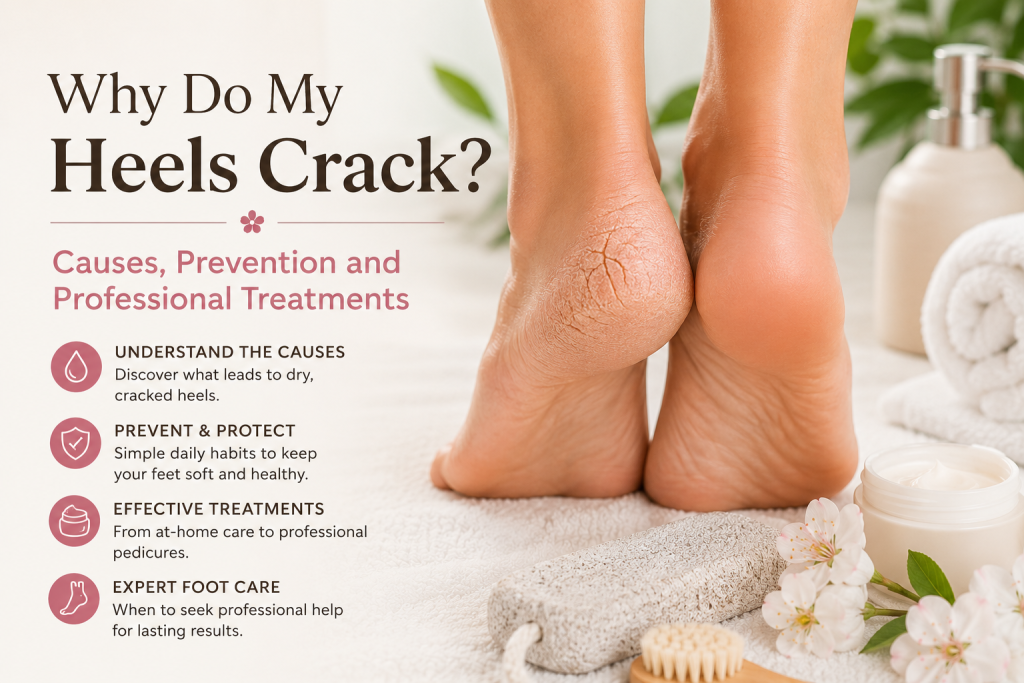
Cracked heels are one of the most common foot concerns, affecting people of all ages. While they often begin as dry, rough skin, untreated cracks can become painful, deepen over time and even increase the risk of infection. The good news is that most cracked heels can be prevented and treated with the right combination of daily care and professional foot treatments. Understanding why your heels crack is the first step towards healthier, softer feet.
What Causes Cracked Heels?
Your heels naturally carry much of your body weight. As you walk, stand and exercise, the skin around your heels stretches. When that skin becomes dry and loses elasticity, it can split under pressure. Several factors contribute to cracked heels, including dry weather, spending long hours on your feet, wearing open-back shoes, prolonged standing, obesity, ageing skin and not moisturising regularly. Medical conditions such as diabetes, eczema and psoriasis may also increase the risk of heel cracks, making professional advice important if symptoms persist.
Signs That Your Heels Need Attention
Cracked heels usually develop gradually. Early signs include rough or flaky skin, white or yellow calluses around the heel, itching and mild discomfort. As the condition worsens, small cracks may deepen, causing pain when walking or standing. If bleeding, swelling or signs of infection develop, it is important to seek advice from a healthcare professional rather than attempting home treatment alone.
Why Moisture Matters
Healthy skin relies on a strong moisture barrier. During colder months, low humidity and enclosed footwear often leave feet dehydrated. Without adequate moisture, the skin loses flexibility and becomes more likely to crack under pressure. Applying a quality foot cream every day helps restore hydration and improves the skin’s natural barrier. Ingredients such as urea, glycerine, shea butter and ceramides are widely recommended because they soften thickened skin while locking in moisture.
How to Treat Cracked Heels at Home
Most mild heel cracks respond well to a consistent foot care routine. Start by soaking your feet in warm water for around 10 minutes before gently exfoliating with a pumice stone or foot file. Avoid aggressive scrubbing, as removing too much skin can make the problem worse. After drying your feet thoroughly, apply a rich moisturising cream and, where possible, wear cotton socks overnight to help the product absorb. Repeat this routine several times each week while moisturising daily.
Everyday Habits That Help Prevent Cracked Heels
Small changes to your daily routine can make a significant difference.
- Moisturise your feet every evening.
- Wear supportive, well-fitting shoes.
- Avoid walking barefoot on hard surfaces.
- Drink enough water to support healthy skin.
- Exfoliate gently once or twice each week.
- Replace worn footwear that no longer provides heel support.
- Protect your feet from prolonged exposure to hot water.
When a Professional Pedicure Is the Better Option
Home care is important, but professional pedicures offer deeper treatment for stubborn dry skin and thick calluses. A trained beauty therapist can safely reduce hardened skin without damaging healthy tissue, improve hydration with professional products and keep toenails neat and healthy. Regular pedicures also allow early identification of nail changes or skin concerns that may require medical assessment. If your heels repeatedly crack despite home care, professional treatment is often the quickest way to restore comfort and improve the appearance of your feet.
Common Myths About Cracked Heels
Many people believe cracked heels are simply caused by poor hygiene, but this is rarely true. Clean feet can still become dry if they lack moisture. Another common misconception is that removing all hard skin solves the problem. In reality, calluses protect the heel from pressure, so only excessive build-up should be reduced. Some people also believe expensive products are always better. Consistency is far more important than price when it comes to maintaining healthy feet.
Choosing the Right Foot Care Products
Look for products specifically designed for dry feet rather than general body lotions. Effective ingredients include urea for softening thick skin, glycerine for hydration, lactic acid for gentle exfoliation and shea butter for long-lasting nourishment. Cuticle oil can also help maintain healthy toenails and surrounding skin, especially if you enjoy regular pedicures.
When Should You See a Healthcare Professional?
Although most cracked heels improve with regular care, some situations require medical attention. Seek professional advice if your heel cracks bleed, become infected, remain painful after several weeks of treatment or if you have diabetes, poor circulation or reduced sensation in your feet. Early treatment helps prevent complications and keeps your feet healthy.
Healthy Feet Start with Consistent Care
Soft, healthy heels are not achieved through one treatment alone. They come from building a routine that combines daily moisturising, gentle exfoliation, supportive footwear and regular professional pedicures. Looking after your feet throughout the year makes it easier to prevent painful cracks and keeps your feet comfortable, healthy and ready for every season.
Frequently Asked Questions
Why do my heels crack even when I moisturise?
You may not be using a foot cream designed for thick heel skin, or you may need regular exfoliation to help moisturisers penetrate more effectively.
Can cracked heels heal naturally?
Very mild cracks may improve with consistent moisturising, but deeper cracks usually require a combination of exfoliation, hydration and professional care.
Is walking barefoot bad for cracked heels?
Walking barefoot on hard surfaces increases pressure on the heels and may worsen existing cracks.
How often should I have a professional pedicure?
Most people benefit from a professional pedicure every four to six weeks, depending on their skin condition and lifestyle.
What ingredients should I look for in a foot cream?
Foot creams containing urea, glycerine, shea butter and ceramides are excellent choices for treating dry, cracked heels.
Don’t let dry, cracked heels stop you from feeling confident. Book a professional pedicure at Bangs & Butch Hair Studio and let our experienced beauty therapists restore softness, improve hydration and keep your feet looking and feeling their very best all year round.